About Tsavo East
Tsavo East National Park is Kenya's largest national park, a vast, open landscape of semi-arid plains, palm-lined rivers and distant horizons. Covering roughly 13,700 square kilometres, it feels wild and remote, yet it is one of the most accessible parks from the coast.
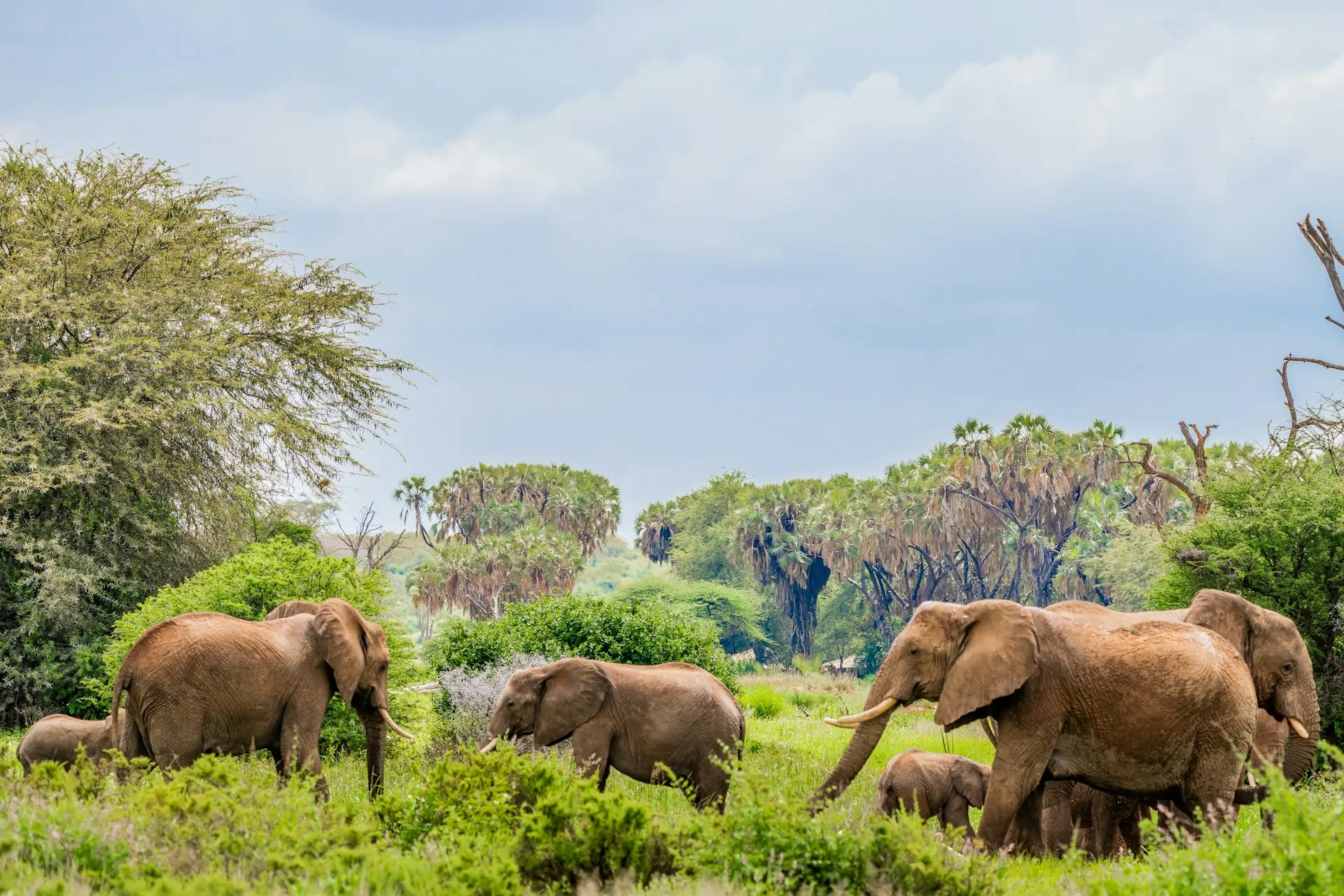
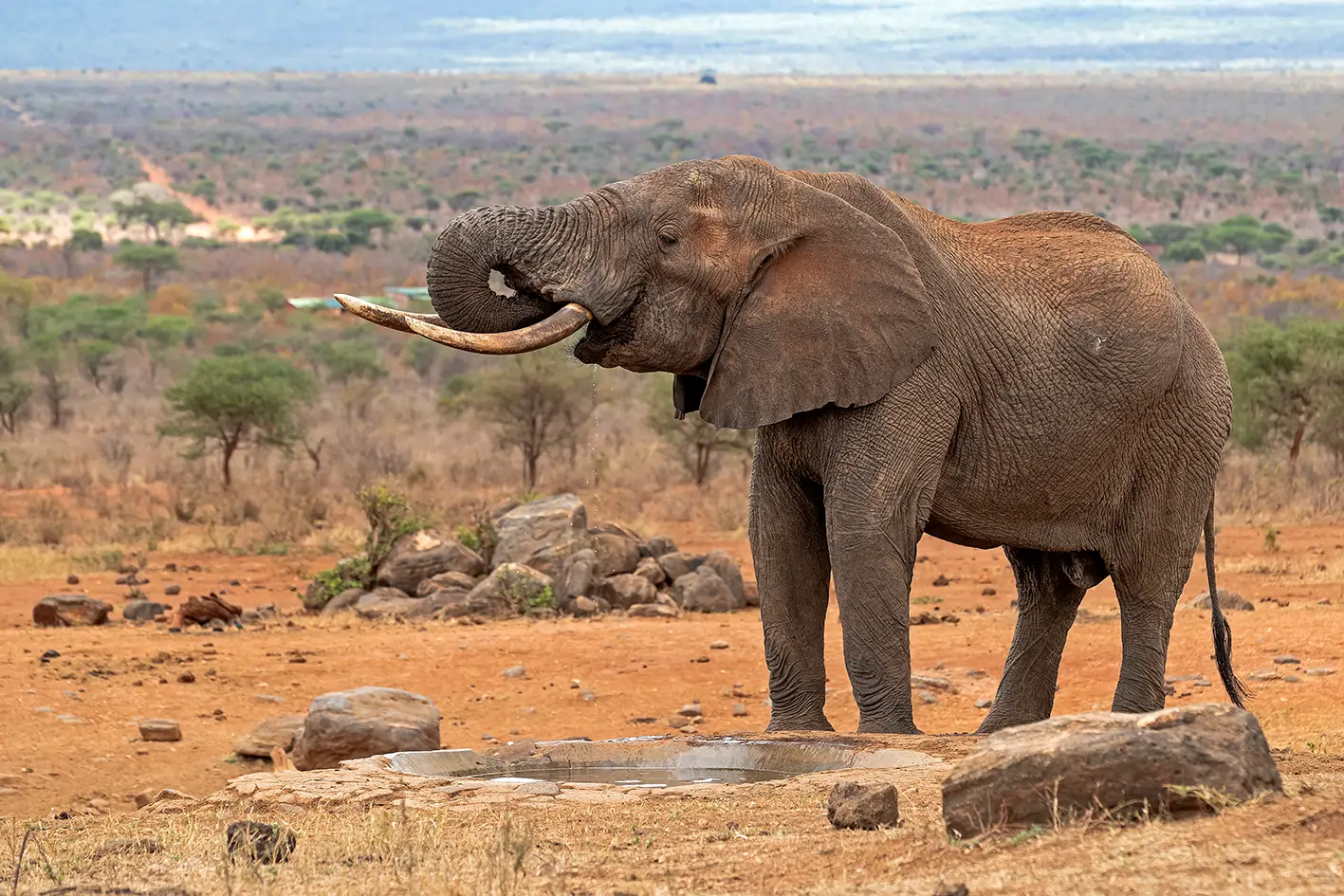
Tsavo East is famous for its 'red elephants', whose colour comes from dust-bathing in the park's red volcanic soil. The open terrain makes wildlife relatively easy to spot, and the Galana River draws animals throughout the year.
With its easy access from Mombasa and Diani, Tsavo East is a popular choice for travellers who want to add a safari to a beach holiday on Kenya's south coast.
Location
South-eastern Kenya
Size
About 13,700 km²
Best Time
June–October & January–February
From the Coast
Approx. 2–3 hours from Mombasa
By Rail
Madaraka Express to Voi
Known For
Red elephants
Why Visit Tsavo East
Red Elephants
Large elephant herds coated in red dust are one of Kenya's most distinctive safari sights.
Galana River and Lugard Falls
The palm-fringed Galana River attracts wildlife year-round and tumbles through the rocky channels of Lugard Falls.
Yatta Plateau
This long ridge, formed by an ancient lava flow, runs along the park's western edge and is among the longest in the world.
Mudanda Rock
A rock outcrop above a natural water catchment where elephants often gather to drink during the dry season.
Vast Open Spaces
Wide horizons and low vegetation make game viewing rewarding, and the park rarely feels crowded.
Safari and Beach
Tsavo East is ideal for travellers combining a short safari with time on Kenya's Indian Ocean coast.
Wildlife in Tsavo East
Tsavo East's open plains and rivers support:
- Large herds of elephants
- Lion, cheetah and leopard
- Cape buffalo and Masai giraffe
- Hippo and crocodile in the Galana River
- Gerenuk, fringe-eared oryx and lesser kudu
- Abundant birdlife, including hornbills, weavers and raptors
Tsavo's lions are often sparsely maned, part of the region's legendary reputation since the time of the 'man-eaters of Tsavo'.
When to Visit Tsavo East
Tsavo East is a year-round destination, though wildlife is generally easiest to find during the dry seasons.
Dry Seasons
January – February & June – October
Wildlife gathers around rivers and waterholes, and the open landscape offers excellent visibility.
Rainy Seasons
March – May & November – December
Green plains, fewer visitors and good birding, although wildlife disperses more widely.
Where to Stay in Tsavo East
Tsavo East offers lodges and tented camps both inside the park and close to its gates.
Riverside Camps
Camps along the Galana River and other water sources offer scenic settings and regular wildlife visits.
Near the Park Gates
Properties close to Voi and other gates are convenient for travellers arriving from the coast or by train.
Getting to Tsavo East
Tsavo East's Voi gate is approximately two to three hours by road from Mombasa, and a little longer from Diani. From Nairobi, the drive takes around five to six hours.
The Madaraka Express train stops at Voi, and charter flights serve airstrips within the park.
Tsavo East FAQs
Why are the elephants in Tsavo East red?
Tsavo's elephants dust-bathe in the park's red volcanic soil, which gives their skin a distinctive reddish colour.
Can I visit Tsavo East from Mombasa or Diani?
Yes. Tsavo East is one of the most accessible parks from the coast, making it ideal for an overnight or multi-day safari during a beach holiday.
Is Tsavo East or Tsavo West better?
Tsavo East is more open and often easier for spotting wildlife, while Tsavo West offers more varied, volcanic scenery. Many travellers visit both.
How many days should I spend in Tsavo East?
One or two nights works well for most visitors, especially when combining the park with the coast or with Tsavo West.