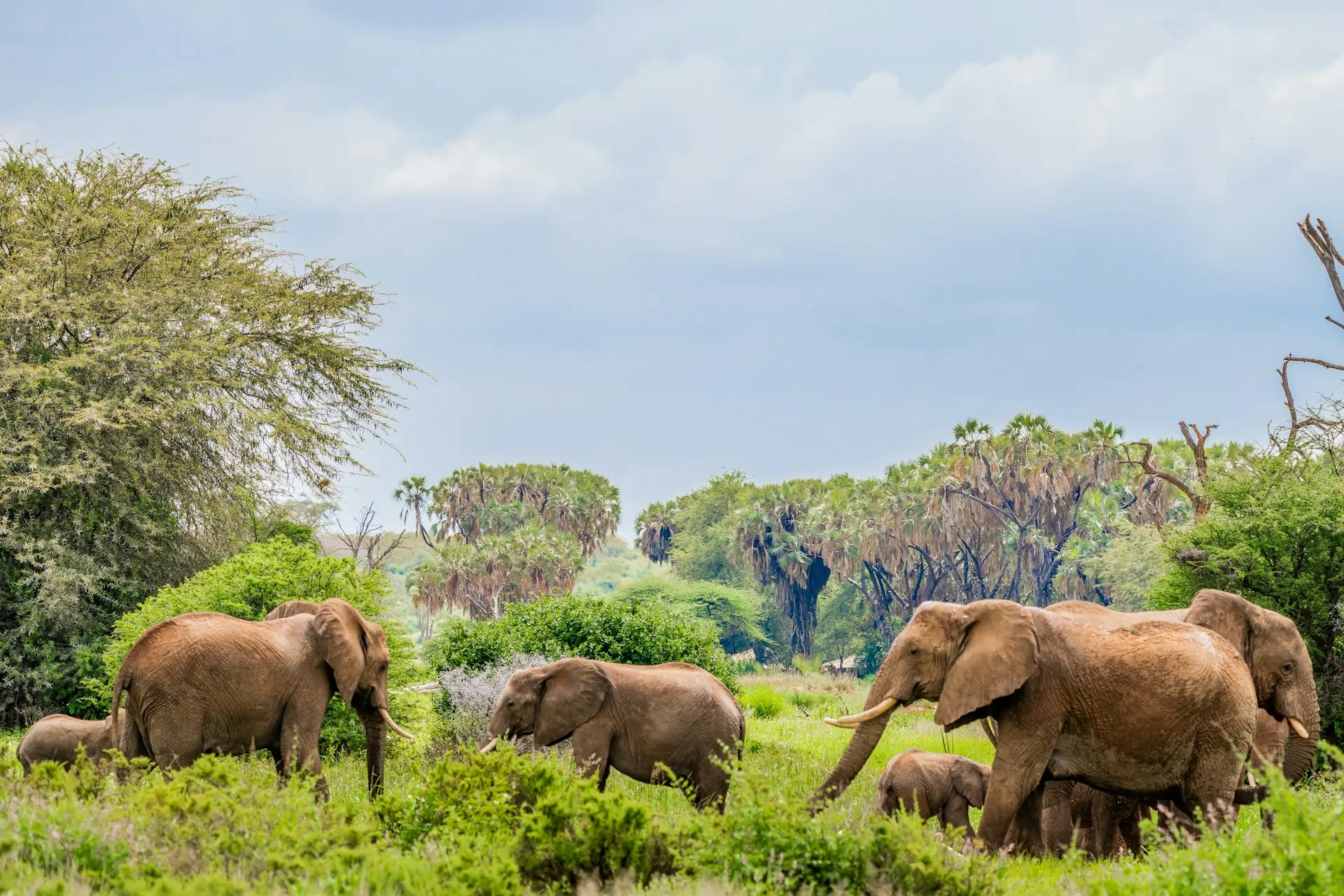
About Tsavo West
Tsavo West National Park is one of Kenya's most scenic wilderness areas, a rugged landscape of volcanic hills, lava flows, rocky outcrops and spring-fed rivers. Together with Tsavo East, it forms one of the largest protected areas in Africa.
Covering roughly 9,000 square kilometres, Tsavo West rewards travellers who enjoy exploring. Game viewing is less crowded than in Kenya's better-known parks, and the scenery changes constantly, from the green oasis of Mzima Springs to the black lava of the Shetani flow.
Located between Nairobi and the coast, and within reach of Amboseli, Tsavo West combines naturally with other parks and with a beach holiday on the Indian Ocean.

Location
South-eastern Kenya
Size
About 9,000 km²
Best Time
June–October & January–February
By Road
Approx. 4–5 hours from Nairobi
By Rail
Madaraka Express to Mtito Andei
Known For
Mzima Springs & lava landscapes
Why Visit Tsavo West
Mzima Springs
Crystal-clear pools fed by underground water from the Chyulu Hills, where an underwater viewing chamber offers a chance to see hippos and fish.
Volcanic Landscapes
Explore the Shetani lava flow and Chaimu crater, striking reminders of the region's volcanic past.
Ngulia Rhino Sanctuary
A protected sanctuary at the foot of the Ngulia Hills plays an important role in black rhino conservation.
Quiet Game Drives
Fewer vehicles than in Kenya's busiest parks, with elephants, lions, leopards and antelopes such as lesser kudu.
Lake Jipe
A remote lake on the Tanzanian border with excellent birdlife and views towards Kilimanjaro on clear days.
Safari and Beach
Tsavo West is a natural link between Amboseli, Tsavo East and Kenya's south coast.
Wildlife in Tsavo West
Tsavo West's varied habitats support a wide range of wildlife, including:
- Elephant and Cape buffalo
- Lion, leopard and cheetah
- Black rhino in the Ngulia sanctuary
- Hippo and crocodile at Mzima Springs
- Lesser kudu, fringe-eared oryx and klipspringer
- A rich variety of birdlife, including migratory species
Dense vegetation in parts of Tsavo West can make wildlife harder to spot than on open plains, so an experienced guide makes a real difference.
When to Visit Tsavo West
Tsavo West can be visited year-round, but the dry seasons generally offer the best game viewing.
Dry Seasons
January – February & June – October
Thinner vegetation and animals gathering near water make wildlife easier to find.
Rainy Seasons
March – May & November – December
Green landscapes and good birding, although some tracks can become difficult after heavy rain.
Where to Stay in Tsavo West
Accommodation in Tsavo West includes established lodges and smaller tented camps.
Lodges
Several lodges overlook waterholes, allowing wildlife viewing directly from the property.
Tented Camps
Smaller camps offer a more intimate atmosphere and closer connection with the surrounding bush.
Getting to Tsavo West
Tsavo West is approximately four to five hours by road from Nairobi along the Nairobi–Mombasa highway, with the Mtito Andei gate the most common entry point.
The Madaraka Express train stops at Mtito Andei, and airstrips within the park serve charter flights. The park can also be reached from Amboseli and from the coast.
Tsavo West FAQs
What is the difference between Tsavo West and Tsavo East?
Tsavo West is more hilly and volcanic, with attractions such as Mzima Springs and the Shetani lava flow. Tsavo East is flatter and more open, making wildlife easier to spot across its plains.
What is Mzima Springs?
Mzima Springs is a series of clear pools fed by underground water from the Chyulu Hills. An underwater viewing chamber offers a chance to see hippos and fish.
Can Tsavo West be combined with Amboseli?
Yes. Tsavo West and Amboseli are frequently combined, and the route can continue to Tsavo East and the coast.
How many days should I spend in Tsavo West?
Two nights is a good minimum, allowing time to visit Mzima Springs, explore the volcanic landscapes and enjoy several game drives.